



Product-Led Growth Agency: PLG Strategy, Activation & Lifecycle for SaaS.

You could be sitting on $1M+ in revenue that product usage data could unlock, but your CRM doesn't speak product. We fix that in 4 weeks.

Product Development

80%

Of product signups never reach sales.

$360K

Lost annually to preventable churn.

60+

Extra days to close each deal.

The Problem: Your Product and Revenue Teams
Don't Speak the Same Language

Product Team's View

12,000 signups/month
 3,500 weekly active users
800 activated users
200 hitting feature limits
150 inviting teammates
75 connecting integrations

Your product team sees thousands of engagement signals every day.

Revenue Team's View

40 "qualified" leads (from forms)
 Unknown product usages
No user intent signals
 75-day sales cycles
Churn surprises every month
 

Your revenue team is flying blind, chasing cold leads while hot users are in your product right now.

What This Gap Costs You (Real Numbers)

Based on a typical B2B SaaS company with 1,000 monthly signups and $10K ACV,
here's what you're leaving on the table:
TOTAL ANNUAL REVENUE LEAK: $1.935M

Unmonetised Signups $720K/year

The Revenue Leak:

  • 1,000 monthly signups
  • Only 2% convert today
  • 3% should be PQLs (30 qualified users/month)
  • At 20% close rate = 6 new customers/month
  • 72 customers/year × $10K = $720K

What's Missing:

  • No product usage scoring
  • Sales doesn't know who's ready
  • Hot users fall through cracks

Preventable Churn $360K/year

The Revenue Leak:

  • $500K monthly recurring revenue
  • 10% monthly churn = $50K at risk
  • 60% could be saved with early intervention
  • $30K saved monthly × 12 = $360K/year
  • Acquisition and retention mismatched

What's Missing:

  • No health monitoring
  • CS is reactive, not proactive
  • Churn surprises every month

Missed Expansion $375K/year

The Revenue Leak:

  • 500 active customers
  • 15% should expand annually (75 upsells)
  • Average expansion: $5K
  • Total: $375K expansion revenue
  • Disconnected insights
  • Siloed tech stacks

What's Missing:

  • No visibility into feature limit hits
  • No team growth detection
  • No usage spike alerts

Sales Velocity Drag $480K/year

The Revenue Leak:

  • 75-day average sales cycle
  • Could be 30 days with product data
  • 5 sales reps closing 2 deals/month each
  • Could close 5 deals/month with faster cycles
  • 3 extra deals/rep/month × $10K × 5 reps × 12 = $1.8M
  • Conservative capture: 26% = $480K

What's Missing:

  • Product usage in deal context
  • Intent signals for timing
  • Pre-educated buyers

The ARISE PLG Revenue Operating System

We built the complete system that turns your product usage data into automated revenue. Not consulting. Not "let's figure it out together." A pre-built, production-ready platform that deploys in 1 day.
PILLAR 1

Intelligence Foundation

The PLG User Object
(93 Pre-Built Properties)

What It Tracks:

  • Core Identity (5 properties)
    Who they are, signup date, status
  • Engagement & Usage (11 properties)
    Activity, features used, session data
  • Activation & Onboarding (8 properties)
    Milestone tracking, time to value
  • PQL Scoring (8 properties)
    Intent signals, readiness indicators
  • Health & Risk (8 properties)
    Churn prediction, satisfaction scores
  • Trial & Conversion (9 properties)
    Trial status, conversion signals
  • Revenue & Plan (7 properties)
    MRR, LTV, plan details
  • Event Triggers (10 properties)
    Feature limits, team growth, usage spikes
Why This Matters:

You don't have to figure out what to track. We've done the trial and error. These 93 properties capture everything that predicts conversion, expansion, and churn.

PILLAR 2

Automation
Engine

12 Pre-Built
Revenue Workflows

Acquisition & Activation

  • User Lifecycle State Machine - Routes users to right workflows
  • PQL Scoring Engine - Scores every user in real-time (15 signals)
  • Onboarding Acceleration - Drives to activation milestone
  • Trial Conversion Campaign - Maximises trial-to-paid conversion

Expansion & Growth

  • Expansion Revenue Engine - Detects upgrade readiness
  • Usage Anomaly Detector - Finds spikes and opportunities
  • Product Qualified Account Rollup - Aggregates company-level signals

Retention & Health

  • Churn Prevention & Health Monitoring - Saves at-risk customers
  • Re-engagement Rescue - Wins back inactive users

Intelligence & Sync

  • Contact-to-PLG User Sync - Enriches CRM with product data
  • Deal Stage Automation - Progresses deals based on usage
  • Behavioural Cohort Analysis - Strategic reporting
Why This Matters:

300+ hours of workflow design already done. Enrollment triggers, branch logic, email templates, task assignments, it's all built. You're not starting from scratch.

PILLAR 3

Revenue
Visibility

4 Executive Dashboards
+ 5 Custom Reports

Dashboards

  1. Executive PLG Overview - Total users, PQLs, pipeline, conversion rates
  2. Sales PLG Pipeline - Open PQLs, hot trials, high-intent users
  3. Customer Success - At-risk users, health alerts, NPS trends
  4. PLG Operations - Workflow performance, data sync health, cohort analysis

Custom Reports

  1. Cohort Retention Analysis - Week 1, 4, 8, 12 retention by cohort
  2. PQL Conversion Funnel - From PQL → Deal → Customer
  3. Expansion Attribution - Revenue by trigger type
  4. Churn Analysis - Patterns, prevention effectiveness
  5. Feature Adoption - Popular vs. underused features
Why This Matters:

Sales sees their PQL queue. CS sees churn risks. Leadership sees the full product-led funnel. Everyone works from the same data for the first time.

Ready to talk?

As a partner to PLG teams, we help across the PLG lifecycle, from a stranger → paying customer. Our services cover the customer journey from user/persona development through marketing channels to optimised onboarding, with a focus on TTV.

We Connect Every Dot From Product Signup to Closed Deal

Stage 1: User Signs Up

  • Your product captures behavioural data
  • API sends to HubSpot
  • PLG User record created instantly

Stage 2: Intelligence Applied

  • 93 properties tracked automatically
  • PQL Scoring Engine calculates readiness (real-time)
  • Health Score monitors engagement

Stage 3: Workflows Activate

  • Right automation at the right time
  • Onboarding → Trial → Conversion flows
  • Expansion detection
  • Churn prevention triggers

Stage 4: Revenue Actions

  • PQL detected → Sales alerted (24h)
  • Feature limits hit → Expansion campaign
  • Health drops → CS intervention
  • Usage spikes → Pipeline opportunity

Stage 5: CRM Enrichment

  • Contact properties sync with PLG data
  • Company-level PQL aggregation
  • Deal stages auto-progress based on usage
  • Sales gets usage context in every conversation

Stage 6: Closed Deal

  • Average cycle: 30 days (down from 75)
  • Product-educated buyers
  • Data-driven conversations
  • Higher win rates

Key Metrics Overlay:

  • PQL identified: <2 hours
  • Sales contacted: Within 24h
  • Trial conversion rate: 15-25%
  • Churn save rate: 60-70%
  • Sales cycle: 60% faster

What PLG Intelligence Actually Lets You Do

Your product generates thousands of signals every day. Without the right system, they disappear into a data silo. With PLG Intelligence, every signal becomes a decision your team can act on inside HubSpot, where they already work.

The five questions you can finally answer:

1. "Who's actually ready to buy?"

Most teams chase every active user. Smart teams chase buying signals. PLG Intelligence scores every user based on what actually predicts conversion: pricing page visits, feature limits hit, team invites sent, upgrade CTA clicks, not just "time in app."

What changes: Sales stops wasting time on tourists. Marketing stops nurturing people who are already sold. Your PQL-to-opportunity rate goes up because you're only calling people showing real intent.

2. "Which trial users will convert, and which won't?"

You have 14 days (or 7, or 30) to turn a trial into revenue. Most teams treat every trial the same. PLG Intelligence calculates conversion probability based on activation speed, feature adoption, and engagement patterns,  then routes high-probability trials to sales while automating nurture for everyone else.

What changes: Your team focuses on the 20% of trials that represent 80% of potential revenue. Trial conversion rates improve because the right intervention reaches the right user at the right time.

3. "Who's about to churn... before they cancel?"

Churn doesn't happen overnight. Usage drops. Logins slow. Support tickets spike. Sentiment shifts. PLG Intelligence tracks all of it and flags at-risk accounts while there's still time to intervene.

What changes: CS gets proactive alerts instead of reactive fire drills. You save accounts that would have churned silently. Retention improves because you're catching warning signs weeks before the cancellation email.

We Don't Just Fix Your CRM.
We Drive Qualified Traffic to Your Product

The best PLG system in the world doesn't matter if nobody's signing up. We build the complete revenue engine: acquisition, activation, and monetisation.

Paid Acquisition (PPC)

What We Do:

  • Google Ads campaigns optimised for product-qualified signups
  • LinkedIn Ads targeting ICP with product-led messaging
  • Retargeting campaigns for trial users and free-to-paid conversion
  • UTM tracking integrated with PLG User object

What You Get:

  • Lower CAC through better targeting
  • Signup quality over quantity
  • Attribution from first touch to closed deal
  • A/B testing on product-led vs. sales-led messaging

Results We've Driven:

  • 42% reduction in CAC by targeting PQL intent
  • 3.2X conversion rate on free trial campaigns
  • 68% lower CPC with product-led messaging

Search Engine Optimisation (SEO)

What We Do:

  • Product-led content strategy (not just "what is X" content)
  • Comparison pages optimised for bottom-of-funnel searches
  • Use case landing pages that drive qualified signups
  • Technical SEO for product pages and signup flows

What You Get:

  • Organic traffic that actually converts
  • Rankings for high-intent product comparison keywords
  • Content that educates AND drives signups
  • Authority in your category

Results We've Driven:

  • 180% increase in organic signups in 6 months
  • 47% of new customers from organic search
  • Position #1-3 for 15+ high-intent keywords

AI & Generative Engine Optimisation (AEO/GEO)

What We Do:

  • Optimise for ChatGPT, Claude, Perplexity recommendations
  • Structure data for AI model training and citations
  • Create AI-friendly comparison content
  • Monitor AI search appearance and mentions

What You Get:

  • Show up when prospects ask AI "what's the best [your category]"
  • Structured comparison data AI models cite
  • First-mover advantage in AI-driven search
  • Brand visibility in AI-generated responses

Results We've Driven:

  • 23% of qualified signups from AI referrals
  • Featured in Perplexity/ChatGPT responses for 8 competitor comparison queries
  • 3.4X higher intent from AI-sourced leads

Content & Conversion Optimisation

What We Do:

  • Product-led landing pages optimised for signup conversion
  • Interactive calculators and ROI tools (like the one you just used)
  • Email nurture sequences for free-to-paid conversion
  • In-app messaging and onboarding optimisation

What You Get:

  • Landing pages that convert at 15-25% (vs. industry 2-5%)
  • Nurture sequences that drive activation
  • Content that moves users through product journey
  • A/B testing on signup flows and value props

Results We've Driven:

  • 340% increase in landing page conversion rates
  • 58% activation rate (vs. 35% baseline)
  • 19% free-to-paid conversion (vs. 12% baseline)

Last call for success

With experience as CTO, CRO, and CMO, the team is well-versed in PLG motions, and this is how we codified a PLG object to give teams on HubSpot rapid access to results-driven outcomes. Reporting, workflows, and a clean integration model roadmap that ensures ROI and results.

So what are you waiting for?

Our Product-Led Growth Consultancy Services:
From First Click to Expansion

What is product-led growth?

Product-led growth (PLG) is a go-to-market strategy where the product itself is the primary driver of acquisition, activation, retention, and expansion.

Instead of relying on sales and marketing to generate demand, PLG companies let users experience product value first, through free trials, freemium tiers, or self-serve onboarding, and use in-product behaviour signals to identify who is ready to buy, expand, or churn.

Companies like Slack, Dropbox, and HubSpot built multi-billion-dollar businesses on PLG motions. For B2B SaaS, it is the most capital-efficient growth model available when implemented correctly. 

We already have a PLG motion in HubSpot. Do we need this?

Possibly. The real question is whether your existing motion is converting product signals into revenue. Four questions to answer right now:

How many PQLs did you generate last week?

What is your aggregate PQL-to-customer conversion rate?

Which trial users are hitting feature limits today?

What is your 30-day cohort retention rate?

If you cannot answer all four instantly from a single dashboard, you are tracking product data but not turning it into revenue. That is the gap the ARISE PLG Revenue Operating System closes. 

Can't we just build this ourselves?

You absolutely could. A typical internal build takes 3–6 months, requires RevOps, Sales Ops, and Marketing Ops working in parallel, costs $150K–$300K in internal time, and carries a 50% abandonment rate. Most teams get halfway through and deprioritise it when other fires emerge.

The ARISE PLG system deploys in 4 weeks and routes first PQLs to sales by week 3. The question is not whether your team could build it. It is what else they could accomplish with 6 months and $200K of capacity returned to them. 

This seems expensive. How do we justify the investment?

The more useful comparison is what inaction costs. For a B2B SaaS company with 1,000 monthly signups, a 2% conversion rate, and a $10K ACV, the ARISE system typically identifies 30 PQLs per month against the 20 currently converting.

Five additional conversions per month equals $600K in annual incremental revenue. The system pays for itself with one extra deal.

The expensive decision is leaving $1M or more on the table every year because the data to find those deals already exists in your product, but never reaches your sales team. 

How quickly will we see results and ROI?

The timeline runs in predictable stages. By week 3, first PQLs are routing to sales automatically. By week 6, the first deals closed from the PLG motion are typically visible. By week 12, churn prevention workflows are actively saving at-risk accounts. By month 4–6, the full system impact is measurable across pipeline velocity, NRR, and CAC payback.

Quick wins, shorter time to value and activation rate uplift are visible within 90 days. Durable revenue gains depend on data readiness and how quickly your product and RevOps teams can close the feedback loop, but most clients see a clear return within two quarters. 

What if our product doesn't currently send data to HubSpot?

Most SaaS products connect to HubSpot in one of three ways. The simplest is a direct HubSpot API integration; Arise GTM provides the integration guide, and most engineering teams complete this in a day or two. The mid-level option uses Zapier or Workato, which

Arise GTM configures on your behalf. For more complex data architectures, a custom integration is available. Around 90% of clients use the first or second option, and neither requires significant engineering resources to implement. 

We're on HubSpot Starter. Will the PLG system work?

HubSpot Professional or Enterprise is required for the PLG system to function fully. The three capabilities that make the system work, custom objects for the PLG User record, workflow automation for the 12 revenue workflows, and custom reporting for the executive dashboards, are not available on Starter.

If you are running PLG at any meaningful scale, Professional is the right tier regardless. The incremental revenue the ARISE system generates typically covers the cost of a HubSpot upgrade within the first quarter of deployment. 

Is PLG right for my SaaS business?

PLG works best for SaaS products where users can experience meaningful value quickly, ideally within minutes or a single session.

The strongest indicators that PLG is the right motion for your business are: your product has a natural self-serve entry point such as a free trial or freemium tier, your sales cycles are currently driven by inbound interest rather than pure outbound, your product generates usage data that could signal buying intent but that data isn't currently reaching your revenue team, and your average contract value sits between $3K and $100K annually.

If two or more of these are true, a PLG motion will compound your existing growth rather than replace it. 

What does an Arise GTM PLG engagement look like?

Every engagement runs in four stages. A 60-minute diagnostic call maps your current gaps, quick wins, and revenue leak estimate.

A discovery workshop covers your current state, goals, data infrastructure, and where the highest-impact interventions are. A 4-week PLG sprint delivers the full system build onboarding, teardown, HubSpot data wiring, PQL definition, workflow deployment, and dashboard configuration.

A quarterly flywheel review then drives ongoing experimentation across pricing, paywall tests, and RevOps alignment to compound results over time. 

How much should we budget for PLG?

Early-stage SaaS companies typically invest GBP 4,000–6,000 per month for a focused PLG foundation build.

Growth-stage companies with more complex data and multi-product environments run GBP 10,000–15,000 per month.

Enterprise programmes involving a fractional VP of Growth and a dedicated squad start at GBP 25,000 per month.

All engagements are scoped against a clear revenue model before work begins, so you know the expected return before committing. 

Which metrics matter most in a PLG motion?

Five metrics are the north stars of every PLG sprint. Activation rate measures the percentage of new users who reach your defined activation milestone.

An activation rate of above 40% within 7 days is the benchmark for high-performing PLG products. Time to Value (TTV) tracks how quickly users experience the outcome your product promises, the faster this is, the higher your trial conversion rate.

Product Qualified Leads (PQLs) and Product Qualified Accounts (PQAs) identify individual users and company accounts showing buying intent based on in-product behaviour.

Net Dollar Retention (NDR) measures whether your existing customer base is expanding or contracting.

Best-in-class SaaS companies run NDR above 120%. Natural Rate of Growth (NRG) strips out paid acquisition to show how much of your growth is driven by the product itself. Track all five weekly. They tell you more about your business than any marketing metric. 

Will PLG replace our sales team?

No. PLG refocuses your sales team on the highest-intent opportunities rather than replacing them.

In a product-led sales motion, reps engage when usage data signals that a user or account is ready to buy, such as pricing page visits, feature limit hits, team invites sent, rather than working a cold outbound list.

The result is higher win rates, larger average deal sizes, and shorter cycles because the buyer arrives at the sales conversation already educated and already sold on the product's value. 

What organisational changes does PLG require?

PLG requires tighter operational loops between Product, Marketing, Sales, and Customer Success than most SaaS companies currently have.

Shared dashboards replace siloed reporting. OKRs get tied to activation and expansion metrics rather than purely to pipeline volume. Data instrumentation and experimentation move from optional capabilities to core functions.

The cultural shift is less dramatic than most leaders expect; it is primarily a change in what data the teams share and how quickly they act on it, not a restructuring of the organisation. 

What ongoing maintenance does the PLG system require?

The system runs automatically once deployed. What your team gets from the ongoing time investment is continuous compounding improvement rather than maintenance for its own sake.

In practice, that means 15 minutes each week reviewing dashboard metrics to spot emerging opportunities, one hour per month optimising any underperforming workflows based on real conversion data, and a quarterly strategic review with the Arise GTM team included in every engagement to set the next sprint priorities.

Total time commitment is around 2–3 hours per month for a system that is working in the background every day. 

Good reads on Product-Led Growth

CRM Segmentation Strategy for Lifecycle Marketing Campaigns
HubSpot Integration Guide: Connect Product Data to Revenue Teams
Customer.io + HubSpot Integration Strategy: A Complete Guide 2026
What to Look for in a Certified Customer.io Implementation Partner 2026
Customer.io for PLG SaaS: The Complete Implementation Guide for 2026
Blueprint for a Unified GTM Tech Stack: Your 360° Customer View
Guide: Scaling Onboarding Without Sacrificing Customer Success
Nurturing Free Users with Lifecycle Marketing: A Tactical Playbook
Attribution in a PLG World: How to Measure Marketing's True Impact
Guide: Blending PLG and Enterprise Sales With Smart Human Touch
How to Build an In-App Onboarding Experience That Increases LTV
Tool Sprawl Is Killing Your PLG. Build a GTM Operating System.
Why PLG SaaS Firms Struggle with Attribution and ROI Measurement
Why PLG SaaS Must Nail Self-Serve Upgrade Paths to Scale
How A Lack of In-App Onboarding and Nurture Starves PLG SaaS
Human Touchpoints Flatten PLG SaaS Growth - Here's how you fix it
How Data Silos and Team Misalignment Kill PLG SaaS Growth
15 In-App GTM Levers for PLG SaaS
In-App Activation Loops: The Engine of PLG Revenue
Customer-Led GTM: The Missing Link Between Product and Sales-Led Growth
Customer.io vs Marketo: Ultimate GTM Guide for Scaling PLG SaaS
What is Lifecycle Marketing and Why It Matters for PLG SaaS?
How Service Design Principles Power Go-To-Market Strategy
What are typical Product-Led Growth experiments to run?
Product-Led Growth (PLG) Strategy: A Guide for SaaS & Fintech [2025]
How to pivot from sales-led to product-led in B2B PLG SaaS
How to build a PLG marketing strategy
Laying the foundations for a product-led growth marketing strategy
8 Key Product-Led Growth (PLG) metrics to focus your strategy
How to build a Product-Led GTM Tech Stack with Hubspot
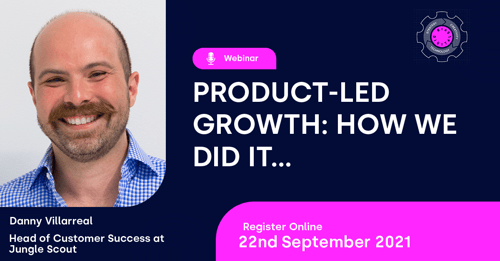
PLG: How we did it with Danny Villarreal Jungle Scout
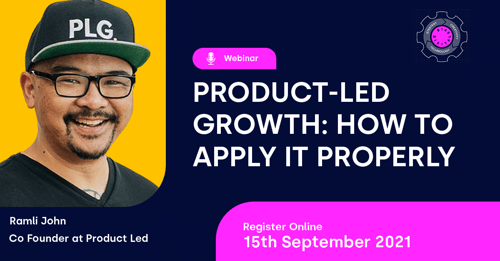
PLG: An interview with Ramli John
Megaphone

Subscribe to Our Newsletter

Stay tuned for the latest news, content, offers and updates from AriseGTM