You run PLG. Your revenue team can't see it. We help B2B SaaS teams find where users stall on the way to value, fix the journey, and put product signals in front of the people who sell, market and support.
|
What your product team sees |
What your revenue team sees |
|---|---|
|
Activations, limits hit, seats added |
A handful of form fills |
|
A live picture of intent |
No usage on the record |
|
Who's ready to buy or expand |
Cold lists and long cycles |
|
Churn risk, weeks early |
Churn as a renewal surprise |
Every day your product logs activations, limits hit, seats added and integrations connected. Your revenue team sees a list of form fills. The users showing real intent sit untouched inside the product. That gap is where product-led revenue leaks.
Reps work with activated users who are hitting limits, not cold form fills. Expansion is spotted when an account reaches its usage ceiling, not at the QBR. Churn risk is flagged weeks before renewal. Forecasts draw on product behaviour as well as rep opinion.

B2B SaaS and technology businesses with an established product and existing customers. We help visualise the growth opportunities within accounts by clearly defining the signals and capturing them.
The size matters less than three questions:
We work with HubSpot, Salesforce CRM and other platforms where the engagement makes commercial and technical sense.
PLG is not a freemium toggle. It is a motion where the product drives acquisition, activation and expansion, and where behaviour in the product, not a form fill, tells you who is ready to buy.
Get it right and more of the right users reach value faster. Get it wrong, and you carry the cost of free users without the revenue.
It also touches more than marketing. How customers access the product, how that value is priced and packaged, how onboarding works, and when a person from your team steps in all shape whether PLG pays off.

We start with commercial performance, not product features: acquisition, activation, time-to-value, trial conversion, retention, expansion, and whether the product can deliver value without significant human help.
Research establishes four layers of evidence: the segments most likely to succeed, the behaviours linked to product value, the friction stopping users from progressing, and the commercial factors behind conversion and expansion.
Rather than a list of product fixes, we design interventions across activation, conversion, engagement, retention, expansion and sales-assisted PLG.

Strategise sets which interventions to pursue, in what order and at what investment, and the right balance of self-service, sales-assisted and enterprise growth.

Execution connects product analytics, CRM data, onboarding, lifecycle automation, product-qualified scoring and revenue reporting in HubSpot or Salesforce, then improves from the evidence.

We review your product-led motion and your data, find where value and revenue are being lost, and agree the interventions with the greatest potential return.
For an ongoing PLG problem, we run the full thinking and produce a build spec: what gets built, in what order, the outcomes to expect and the cost.

A fixed-price project or focused sprint, or an ongoing retainer, scoped by what the assessment or strategy shows you need. Some changes take weeks; others need product engineering, integrations or a longer measurement period.
Let's get your PLG strategy back on track. From acquisition to onboarding and on to expansion, we work with your internal teams to craft the PLG plays that optimise your GTM.
Free trial, freemium and usage-based models that reflect how customers get value and what it costs you to deliver it.
Find the moment users first get value, remove the steps that slow them down, and measure activation in a way your team agrees on.
Score the product behaviour that predicts conversion, expansion and churn, and route ready accounts to the right person.
Behaviour-triggered messages in HubSpot or Customer.io that move users from sign-up to value to upgrade.
Programmatic paid media aimed at the users and accounts most likely to reach value, with product and CRM data shaping audiences, so spend is judged on activation and pipeline, not sign-ups alone.
Alerts when accounts hit usage limits, add seats or go quiet, so sales and customer success act early.
Connect product analytics tools such as PostHog and Mixpanel to your CRM, with dashboards your leadership team can read from one source.
As published by Wiley in 2025, Go To Market Uncovered discusses how to launch a product and achieve long-term revenue growth through tech, alignment and strategy.
For teams with a self-service and enterprise GTM motion running in parallel, we help marketing and revenue teams align around a single customer view with mapped expansion motions.
Your customers don't all buy the same way, so your go-to-market shouldn't force one motion. Most businesses run more than one of these, and a customer can move through all three.
|
Self-service PLG |
Sales-assisted PLG |
Enterprise and account-led |
|
|---|---|---|---|
|
Motion |
Users discover, adopt and buy on their own |
Product usage creates qualified sales opportunities |
Product adoption supports larger buying decisions |
|
Customer |
Individuals and smaller teams |
Growing teams and departments |
Larger organisations and strategic accounts |
|
Sales input |
Minimal or exception-based |
Triggered by product-qualified behaviour |
Consultative, multi-stakeholder |
|
Marketing input |
Acquisition, education and lifecycle automation |
Segment campaigns, nurturing and product marketing |
Account intelligence, buying groups and ABM |
|
Main outcome |
Efficient activation and paid conversion |
Higher-value opportunities and expansion |
Enterprise pipeline, larger contracts and retention |
Ray de Silva,
CCO, HubX CapitalSameer Bhatia
Founder & CEO, ProProfsHeidi Humphries
Director Sales & Marketing, DSSIJody Leon
CMO, DSMN8James Hodgson
UK CEO, 300BrainsMarkku Vuorinen
Head of Demand Generation, ContractbookAquant provides AI-powered service intelligence for enterprise field service teams. When we started working together it was a roughly $20m ARR business with a strong, sales-led enterprise model.
We helped design a product-led growth strategy alongside that sales motion. The work covered:
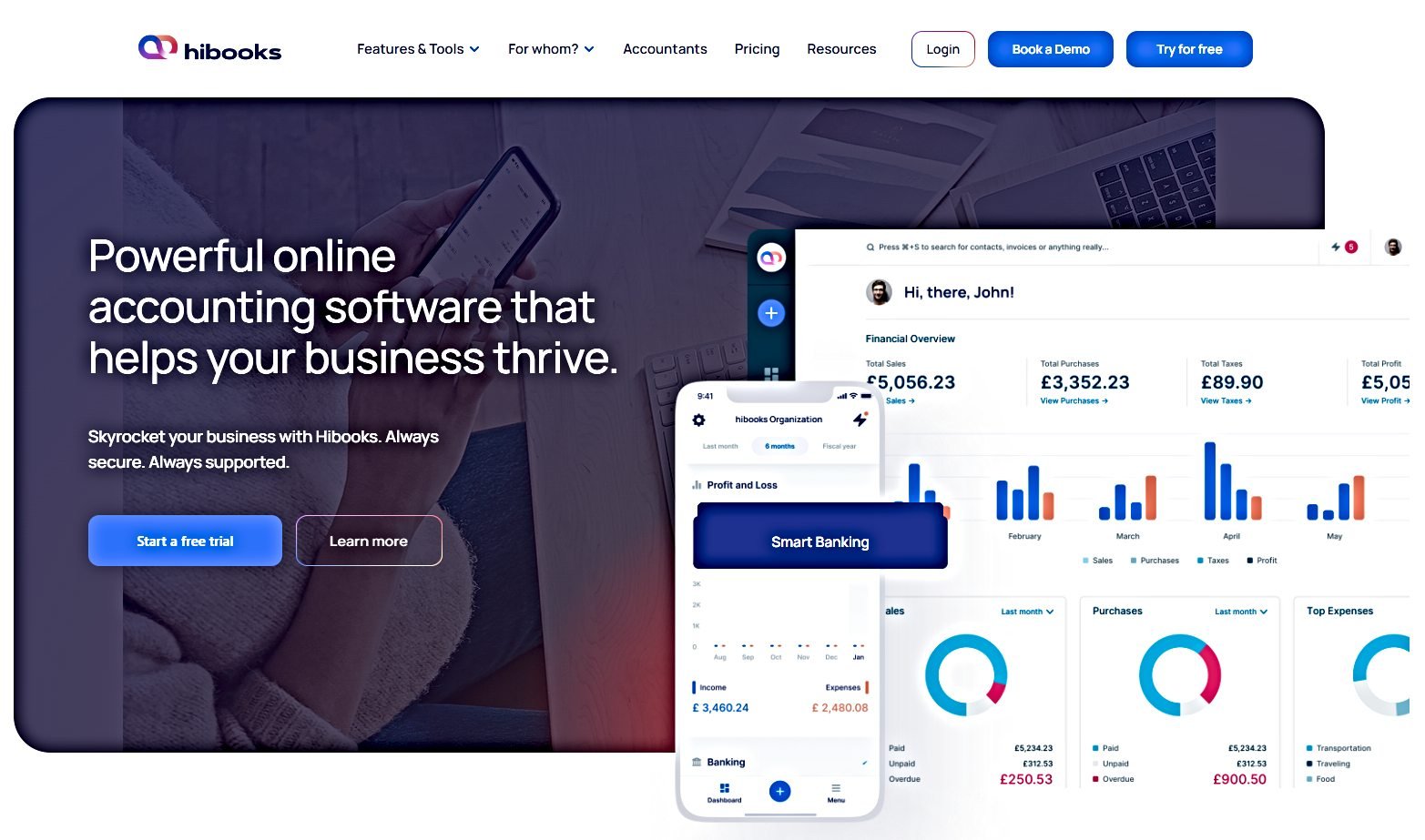
Hi-Books needed users to reach value faster. We rebuilt its onboarding from 27 steps to 6 and treated it as an activation problem, not a UX one.
27 to 6 onboarding steps
77% improvement in time-to-value
Product-marketing-led, hands-on and senior. Our team has worked as CTO, CRO and CMO, and our founder wrote Go-To-Market Uncovered (Wiley). We build inside your systems and hand you the keys, with no subcontracting and no slide deck at the end.
We're ISO 27001 and ISO 42001 compliant, which matters when product and customer data move between systems.
We don't quote a PLG retainer cold. As with every Arise GTM engagement, you pay for the thinking first, and the work decides what execution needs. There are two routes, the same as on our how-to-engage-us page.
A full review of your product-led motion: product data, onboarding and activation, pricing, ICP, tech and reporting. You get the symptoms in writing and what they point to. £10,000, deducted from a full engagement if you go on to strategy and execution. Any fixed-scope build after it is priced from the assessment.
We run Assess, Research, Ideate and Strategise for your product-led motion, and you come out with a build spec rather than a deck. £25,000 per GTM motion. We then become your execution team on a monthly retainer scoped by the strategy, so you only pay to execute what the work proves you need.
Product-led growth is a go-to-market motion where the product drives acquisition, activation and expansion. Users experience value before a significant sales commitment, and what they do in the product tells your team who is ready to buy, expand or needs help.
A product-led growth agency helps you use the product to acquire, convert and expand customers. That covers finding where users stall, designing pricing, onboarding and lifecycle changes, connecting product data to your CRM, and showing sales and customer success when to step in. Good PLG consulting will also tell you when PLG isn't the right investment yet.
It usually fits when customers can experience real value before buying, when you can measure what they do in the product, and when those signals could shape acquisition, conversion, retention or expansion. The assessment tells you whether PLG is worth the investment for your business, and it can conclude that it isn't yet.
No. PLG uses the product to create demand and show value, and tells your team when a person should step in. Most B2B SaaS companies run product-led, sales-led and account-based motions together.
No. HubSpot is our preferred CRM and where ARISE Revenue OS is most useful, but our strategic PLG work doesn't depend on it. We also work with Salesforce and other platforms where it makes commercial and technical sense.
Many of our clients already have one. The question is whether product signals reach the people who sell, market and support, and whether you know where users stall. The assessment shows where value and revenue are being lost in the motion you have.
You can, and some teams do. It usually means product, data, sales ops and marketing ops working on it in parallel alongside their day jobs. We bring a tested method and senior people who have done it before, build inside your systems and hand you the keys.
A PLG assessment is £10,000, deducted from a full engagement if you go on to strategy and execution. A full PLG motion rebuild is £25,000, after which any retainer is scoped by the strategy rather than quoted up front, so further investment is based on evidence rather than estimates.
It depends on the interventions agreed. Some changes, such as removing onboarding friction or routing product-qualified accounts, can show early movement within weeks. Others need product engineering, integrations or a longer measurement period. We agree what success looks like and how it will be measured before we start.
Usually activation, time-to-value, conversion from free or trial to paid, retention and expansion. What counts as activation is specific to your product, so we define it with you, set a baseline from your own data and measure improvement against it rather than against industry averages.
That's common. We can connect product analytics tools such as PostHog and Mixpanel, or your own event data, to your CRM. The assessment covers what's needed and how much engineering time it takes.
We start with commercial performance rather than product features, and our assessment can conclude that PLG isn't right for you yet. We run PLG alongside sales-led and account-based motions rather than in place of them, and we cover pricing and packaging as well as onboarding and lifecycle. Everything is built
Yes. We run programmatic paid acquisition for self-service and sales-assisted motions, using product and CRM data to decide who we reach and measuring spend against activation and pipeline, not just sign-ups.
Book a 30-minute call. We'll look at where revenue leaks in your current setup and what a product-led motion could look like in your stack. No cost, no obligation.